
Bees
Identification
Yellow and Black
Most bees are relatively small, with an average length of 0.5-2 cm, depending on their type. However, some species can grow up to 3 cm long.
Bees are fascinating insects that belong to the family Apidae. They are known for their role in the pollination and production of honey. Bees play a vital role in the ecosystem by collecting pollen and nectar from flowers. They also help to pollinate plants, which in turn helps to provide food for other animals.
Get A Free Quote
We are affordable Pest Control Service in GTA & Surroundings Areas.
What Do Bees Look Like?

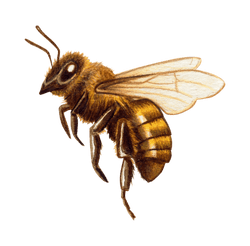
Bees have six legs, two pairs of wings, antennae and three main body regions: the head, thorax and abdomen. Their bodies are often covered in hairs that help collect pollen as they visit flowers.
Bee colour and size depend on the species. Some are small and dark, while others are large, fuzzy and marked with black, yellow, orange or white bands. Certain species even have metallic green or blue colouring.
Common identification features include:
- Hairy body: Many bees have visible hairs that help trap pollen.
- Pollen-carrying structures: Female bees often have specialised hairs or baskets for carrying pollen.
- Broad body shape: Many bees look stockier than wasps.
- Flower-visiting behaviour: Bees frequently move between flowers while collecting nectar and pollen.
- Nesting habits: Different species nest underground, in cavities, in hollow stems or in wood.
Appearance alone is not always enough to identify a bee. Some flies mimic bees, while certain wasps have similar black-and-yellow markings. If you find an insect near your roof, garden or patio, observe it from a safe distance. Its shape, flight pattern and nesting behaviour can help with identification.
What Are the Different Types of Bees?
There are thousands of bee species worldwide. They differ in their appearance, nesting habits, social behaviour and relationship with plants. The following types are particularly relevant when identifying bees around homes and gardens.
1. Honey Bees
Honey bees are social insects best known for producing honey and living in organised colonies. The Western honey bee (Apis mellifera) is widely managed by beekeepers for honey production and crop pollination.
A honey bee colony typically contains a queen, worker bees and drones. Workers collect nectar and pollen, maintain the hive and care for developing young. The queen’s primary role is reproduction, while drones are male bees involved in mating.
Honey bees may establish colonies in managed hives or suitable cavities. In some situations, a colony can occupy a hollow tree, wall cavity, roof space or another sheltered location.
Signs of honey bee activity include:
- Frequent bee traffic entering one opening.
- Bees clustering on a branch or other surface.
- A temporary swarm resting in a visible location.
- Repeated movement around a wall cavity or roof opening.
A swarm is a group of bees travelling with a queen to establish a new colony. Swarming can look alarming, but a resting swarm is not automatically an aggressive nest.
If honey bees establish themselves inside a building, avoid sealing the opening or spraying the colony without professional advice. The correct response depends on the location, access and condition of the colony.
For more information, see Acme Pest Solutions’ guide on how to get rid of honeybees.
2. Bumble Bees
Bumble bees are large, fuzzy bees that are often black and yellow, sometimes with orange, red or white markings. They are important pollinators because they visit many kinds of flowers. Their ability to forage in relatively cool conditions also makes them useful in some agricultural settings.
Many bumble bee species form small colonies. Queens commonly establish nests in protected cavities, including abandoned rodent burrows, dense vegetation or other sheltered locations. Bumble bees may be noticed flying repeatedly near a hole in the ground or beneath a garden structure. This can indicate a nest nearby.
They are generally not interested in people, but workers may defend their colony if it is disturbed. Avoid digging into a suspected nest or blocking its entrance.
When a nest is away from busy areas, leaving it undisturbed may be the most practical option. If it is close to a doorway, children’s play area or another high-traffic location, seek advice from an appropriate professional.
3. Carpenter Bees
Carpenter bees are often confused with bumble bees because both can be relatively large. However, many carpenter bees have a shiny, relatively hairless abdomen, whereas bumble bees tend to have a densely hairy body.
Some carpenter bee species excavate tunnels in wood to create nesting galleries. They may use untreated timber, wooden trim, fascia boards, decks, fences and roof eaves.
Common signs include:
- Round holes in exposed wood.
- Sawdust-like debris beneath an opening.
- Bees repeatedly entering the same hole.
- Tunnels or galleries inside wooden structures.
Carpenter bees can cause damage when nesting activity is repeated over time. Existing holes may also attract other bees in later seasons. Inspect the affected timber to determine whether the holes are active and whether there is structural damage. Avoid plugging active entrances before confirming the situation, as this may trap bees inside or complicate control.
If the affected wood is part of a roof, deck or other important structure, consider professional assessment before attempting repairs or treatment.
4. Mason Bees
Mason bees are solitary bees that use mud or similar materials to partition their nesting cavities. They may nest in hollow stems, existing holes in wood or purpose-made bee houses.
Unlike honey bees, a typical solitary mason bee female works independently rather than maintaining a large social colony. Mason bees are valuable pollinators, and their nesting activity does not usually create the same concerns as a large colony inside a building.
If mason bees are using a suitable outdoor nesting location that does not create a safety concern, leaving them undisturbed can support local pollination.
5. Leafcutter Bees
Leafcutter bees are solitary bees that cut small, rounded pieces from leaves. They use these pieces to line the cells of their nests. Their activity may leave neat circular or oval cut-outs along the edges of leaves. These marks can look like plant disease or insect damage, but they are characteristic of leafcutter bee behaviour.
Leafcutter bees often use existing cavities in wood, stems or other materials for nesting. They generally do not create large social colonies. Because they are useful pollinators, limited leaf-cutting damage is usually not a reason to eliminate them. If necessary, protect particularly vulnerable plants while maintaining other suitable flowering plants nearby.
6. Mining Bees
Mining bees are solitary bees that commonly nest in the ground. Females excavate small tunnels in suitable soil and create cells for their developing offspring.
Their activity may become noticeable when many bees emerge in the same patch of ground during the breeding season. Several nearby entrances do not necessarily mean that a single large colony is present.
Mining bees are generally less defensive than social bees because they do not have a large shared nest to protect. However, it is still sensible to avoid disturbing them.
If ground-nesting bees are present in a lawn or garden, consider whether their location actually creates a problem before taking action.
7. Sweat Bees
Sweat bees belong to several groups of small to medium-sized bees. Some species have metallic green or blue colouring, while others are darker and less conspicuous.
They are attracted to flowers and obtain nutrients from pollen and nectar. Some may also land on human skin to collect moisture and salts from sweat. Most sweat bees are solitary, although certain species show more complex nesting behaviour.
Their small size can make them difficult to distinguish from other insects. If you see metallic green bees visiting flowers, they may be sweat bees rather than wasps or flies.
What Is the Difference Between Bees and Wasps?
Bees and wasps are closely related, but their appearance, feeding habits and nesting behaviour often differ.
Feature | Bees | Wasps |
Body | Often hairy and stocky | Often smoother and more slender |
Main food sources | Nectar and pollen; larvae often receive pollen-based food | Varies; many hunt insects or scavenge food |
Pollination | Many species are important pollinators | Some species also pollinate flowers |
Nesting | Soil, wood, cavities, stems or hives | Paper nests, underground cavities and other sites |
Behaviour near people | Usually focused on flowers or nest activities | Some species may investigate food or drinks |
Sting risk | Some species sting when threatened | Some species can sting repeatedly |
These are general differences, not absolute rules. Some bees have relatively smooth bodies, and some wasps are important pollinators.
Wasps are often mistaken for bees because of their similar colouring. Yellow jackets and other social wasps can also build nests in locations that create a greater risk of accidental contact.
If you suspect a wasp rather than a bee, read our guide to wasps and their identifying features. Correct identification is especially important before deciding whether a nest should be left alone, monitored or professionally managed.
What Is the Life Cycle of a Bee?
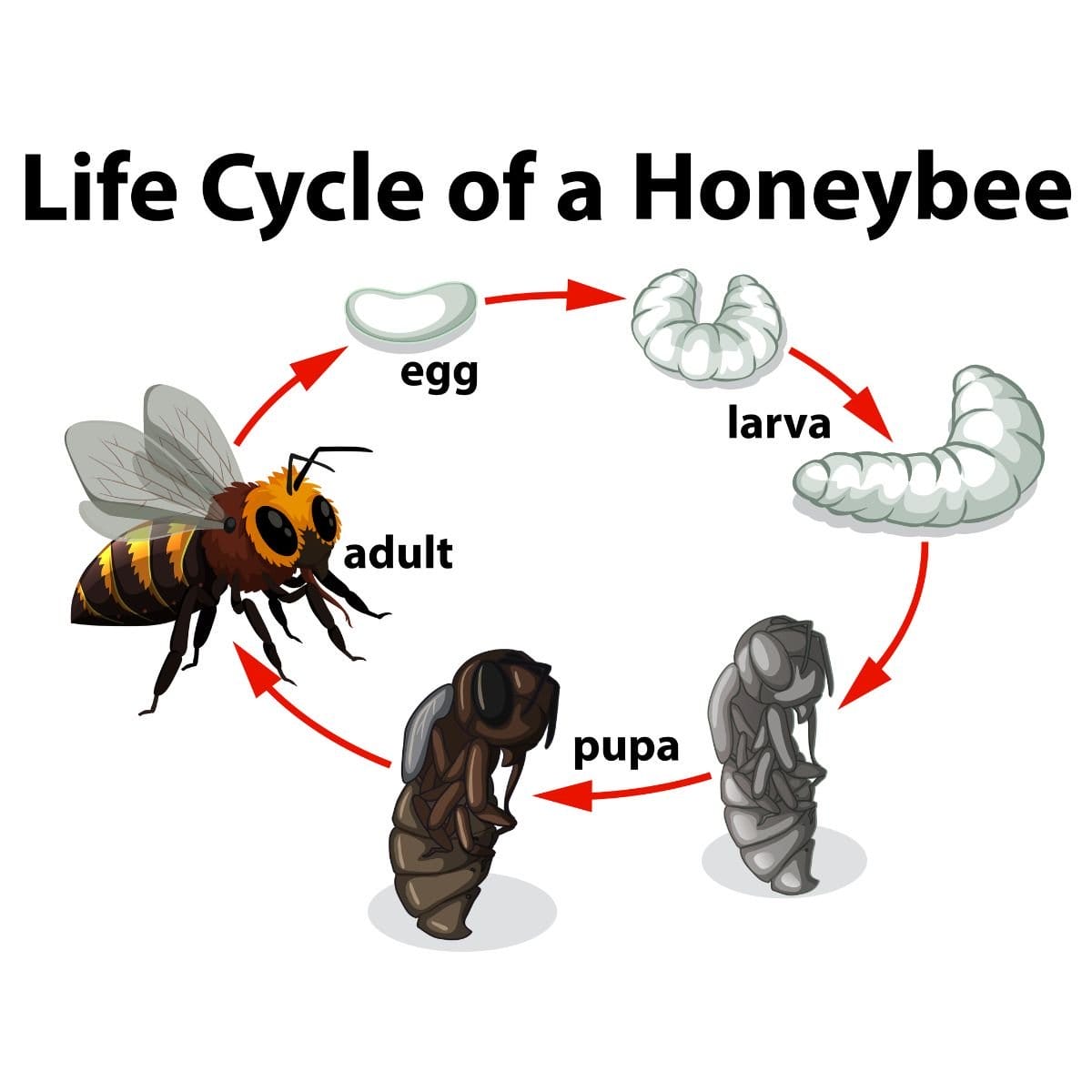
Bees undergo complete metamorphosis, which means they develop through four stages: egg, larva, pupa and adult. The exact timing depends on the species, temperature, food availability and seasonal conditions.
Stage 1: Egg
A female bee lays eggs in prepared nesting cells. In social species, the queen typically lays most of the eggs in the colony. Depending on the species and the egg’s development, an egg may hatch within several days.
Stage 2: Larva
The egg hatches into a larva, which receives food according to the species’ nesting and social behaviour. For many bees, pollen and nectar provide the nutrients needed for development. In social honey bee colonies, worker bees feed and care for developing larvae.
Solitary bees generally provision individual nest cells and then close them, leaving the developing young to complete their growth.
Our Guarantee
Acme Pest Solutions is dedicated to providing exceptional pest control services focusing on customer satisfaction. We aim to exceed industry standards by delivering high-quality work. We stand behind our work with a guarantee for each job completed, giving customers peace of mind. We are committed to ensuring seamless and high-quality service and will return to make things right if any issues arise.
Stage 3: Pupa
After the larval stage, the bee develops into a pupa. During this stage, it transforms into an adult.
Depending on the species, the pupa may remain inside a protected cell within a nest, a soil tunnel or another cavity.
Stage 4: Adult
An adult bee emerges from its cell and begins its adult activities. These vary by species and sex.
Worker honey bees may clean the hive, care for young, build comb or collect food as they age. Solitary female bees typically focus on nesting and provisioning offspring, while males often focus on mating.
The life cycle helps explain why a nest may remain active even when the number of visible bees changes. Seasonal timing and species behaviour affect when new adults emerge and how long a nest remains occupied.
Why Do Bees Come Around Your House?
Bees usually visit residential properties because they offer food, water, nesting opportunities or sheltered spaces.
1. Flowering Plants Provide Food
Bees visit flowers to collect nectar and pollen. Gardens with a range of flowering plants may attract several bee species throughout the growing season. This activity is generally beneficial and does not mean bees are nesting on the property.
2. Sheltered Cavities Provide Nesting Sites
Some bees use hollow trees, gaps in wood, wall cavities, roof spaces or other protected openings. Honey bees may establish colonies in suitable cavities, while carpenter bees excavate tunnels in appropriate wood. Other species use existing holes or ground-level nesting sites.
3. A Swarm Is Looking for a Nesting Location
A honey bee swarm may temporarily gather on a branch, fence or other surface while scout bees locate a suitable nesting site. A swarm can appear suddenly and contain many bees, but it is not necessarily a permanent nest. Do not approach or attempt to capture the swarm yourself.
4. Water Is Available
Bees may collect water from shallow puddles, birdbaths, garden features or other damp areas. If you notice regular bee visits to a water source, observe from a distance before deciding whether any change is necessary.
5. Wood Provides Nesting Material or Shelter
Carpenter bees may use exposed timber for nesting. Other solitary bees use existing holes in wood or hollow stems. Inspect repeated activity around timber for signs of holes or debris. The type of bee and the condition of the wood will determine whether any intervention is needed.
What Are the Signs of a Bee Nest?

Bee activity can be temporary or may indicate an established nest. The following signs can help you decide whether further investigation is appropriate.
Repeated Flight to One Opening
If bees repeatedly enter and leave the same hole in a wall, roof, tree or other structure, a nest may be present nearby. Observe the activity from a safe distance. Do not block the entrance or attempt to inspect a concealed cavity by opening it yourself.
A Cluster of Bees
A group of bees resting together on a branch or other surface may be a temporary swarm. A swarm’s presence alone does not establish that the bees have built a nest inside the property. Give them space and contact an appropriate local beekeeper or professional if help is needed.
Holes in Wooden Structures
Round openings in exposed timber, especially when accompanied by repeated bee activity or debris, may indicate carpenter bees. Other causes can create holes in wood, so inspect the surrounding evidence rather than relying on hole shape alone.
Bees Entering a Ground Opening
Bees repeatedly entering a small hole in the ground may be mining bees or another ground-nesting species. Bumble bees may also use protected cavities close to ground level.
Avoid digging or pouring substances into the opening. Identify the likely species and determine whether the location creates an actual safety concern.
Are Bees Dangerous?
Most bees are not interested in stinging people when they are left alone. However, a bee may sting if it is trapped, handled, stepped on or perceived as a threat to its nest. Risk depends on the species, the number of bees and how close people are to the nesting site.
A single bee visiting a flower is different from a colony inside a busy entrance or a nest disturbed during home repairs.
How to Reduce the Risk of Being Stung
- Avoid swatting at bees or making sudden movements near them.
- Keep a safe distance from nests and swarms.
- Do not handle bees or attempt to capture a swarm.
- Keep children and pets away from suspected nesting locations.
- Avoid mowing, digging or carrying out repairs directly over an active nest.
- Seek professional advice when a colony is inside a building or near a busy walkway.
A sting can cause local pain, redness and swelling. Some people experience severe allergic reactions. Seek emergency medical help if a sting causes difficulty breathing, swelling of the tongue or throat, faintness or other signs of a serious allergic reaction. Anyone with a known severe bee-sting allergy should follow their prescribed emergency plan.
How to Handle Bees Around Your Home
The right response depends on whether the bees are simply visiting flowers, temporarily swarming or nesting in a location that creates a risk.
Step 1: Observe From a Safe Distance
Note where the bees gather and whether they are entering a particular opening. Avoid touching the insects or disturbing the nest. If possible, take a photograph from a safe distance to help identify the species.
Step 2: Determine Whether There Is a Nest
Occasional bees visiting flowers do not usually require intervention. Repeated traffic to a wall cavity, roof opening or hole in wood may indicate a nest. Do not assume that every group of bees is a honey bee colony. The correct identification affects the available options.
Step 3: Avoid Spraying or Blocking the Entrance
Do not spray unidentified bees with household insecticides or seal a nest entrance while bees may still be inside. These actions can increase agitation, create additional problems within a wall cavity or make later removal more difficult. If bees are inside a building, professional assessment can help determine the appropriate next step.
Step 4: Consider Whether the Location Is a Genuine Hazard
A small solitary bee nest in a quiet part of the garden may not need removal. A colony inside a frequently used entrance or close to a vulnerable person may require more urgent attention. Consider the amount of activity, the distance from people and whether the nest can be left undisturbed.
Step 5: Seek Appropriate Professional Help
For a honey bee swarm, a local beekeeper or swarm collection service may be able to advise on collection. For bees established inside a building, the best approach depends on the species and structure.
Acme Pest Solutions provides pest control and wildlife-related services. If you need advice about a suspected bee problem, explain where the bees are located and describe their activity so the appropriate next step can be considered.
How to Prevent Bee Problems Around Your Property
Preventing unwanted nesting does not require eliminating bees from the garden. The goal is to reduce nesting opportunities in unsuitable locations while allowing beneficial pollinators to continue visiting flowers.
Maintain Exterior Wood
Inspect exposed timber, fascia boards, decks and other wooden structures for signs of damage or carpenter bee activity. Keep wood in suitable condition and address damaged areas when there is no active nesting activity. Repairs should be planned carefully if bees are using the structure.
Seal Suitable Gaps After Confirming the Source
Gaps around exterior openings may provide access to sheltered cavities. However, sealing an opening while bees remain inside can create complications. First determine whether the opening is being used by a colony. Once the situation has been appropriately resolved, repairs may help prevent future nesting.
Keep Outdoor Areas Tidy
Store materials that create unwanted shelter in an orderly manner, and maintain entrances and walkways so that activity can be observed. Do not remove natural nesting habitat indiscriminately. Many solitary bees use soil, hollow stems and existing cavities without causing damage.
Plant a Variety of Flowers
Flowering plants provide nectar and pollen for bees and other pollinators. If bee activity near a doorway is inconvenient, consider placing attractive flowering plants farther from the busiest entrances while retaining suitable pollinator habitat elsewhere in the garden.
Inspect Problem Areas Periodically
Look for repeated bee traffic, new holes in wood or activity around roof openings. Early observation can help distinguish harmless visitors from nesting activity that needs attention.
Common Mistakes to Avoid When Dealing With Bees
Treating Every Bee as a Pest
Bees provide important pollination services. Many species are solitary and pose little risk when left undisturbed. Identify the insect and assess the location before deciding whether removal is necessary.
Confusing Bees With Wasps
Some wasps are more likely to investigate uncovered food or defend a nest aggressively. Misidentification may lead to the wrong control method. Observe body shape and behaviour from a safe distance, and seek help if the species remains unclear.
Disturbing a Nest
Poking, spraying, digging or sealing an active nest can provoke defensive behaviour and increase the risk of stings. Keep people away and seek suitable advice rather than attempting a risky removal.
Blocking a Wall Opening Too Soon
A colony inside a wall may continue to occupy the cavity even if the entrance is blocked. This can make the situation more difficult to assess and resolve. Confirm the source and arrange appropriate professional guidance before carrying out repairs.
Using Pesticides Without Checking the Label
An insecticide that is appropriate for one pest or location may be unsuitable for another. Pesticide exposure can also affect non-target pollinators. Use products only when appropriate, follow all label directions and avoid unnecessary treatment of beneficial bees.
When Should You Contact a Professional?
Consider professional assistance if bees are nesting inside a wall or roof, activity is concentrated near a busy entrance, the species is uncertain or the colony cannot be safely left undisturbed.
Professional advice is also useful when a suspected carpenter bee problem involves damaged timber or when a large swarm appears in an inconvenient location.
When assessing the situation, a professional may need to consider:
- The likely bee species.
- Whether the bees are nesting or only visiting.
- The location and accessibility of the nest.
- The proximity of people and pets.
- Whether the colony can remain safely in place.
- Which removal or management options are appropriate.
For general guidance on selecting a provider, read how to choose a pest control company in Mississauga. Acme Pest Solutions serves residential and commercial customers in Milton, Oakville, Mississauga and Brampton, Ontario. The appropriate response depends on the pest, the location and the circumstances of the problem.
Frequently Asked Questions About Bees
1. What are bees?
Bees are flying insects that feed mainly on nectar and pollen. They are important pollinators and include honey bees, bumble bees and many solitary species.
2. Are all bees social insects?
No. Honey bees and bumble bees form colonies, but many bee species are solitary. A solitary female typically builds and provisions her own nest rather than relying on a large social colony.
3. Do all bees make honey?
No. Honey production is associated with certain bee species, particularly honey bees. Most solitary bees do not produce honey in quantities that people harvest.
4. Why are bees gathering around my house?
Bees may be visiting flowering plants, collecting water, resting as a swarm or nesting in a sheltered location. Repeated traffic into one opening may indicate a nest that needs further assessment.
5. How can I tell bees and wasps apart?
Many bees have hairier, broader bodies, while many wasps look smoother and more slender. Behaviour and nesting habits can also help, but some species are difficult to distinguish without close examination.
6. Can bees nest inside walls?
Yes. Honey bees may establish colonies in suitable wall or roof cavities. Some other bee species use existing holes in wood or similar sheltered spaces.
7. Should I remove a bee swarm?
Do not attempt to capture or disturb a swarm yourself. Keep your distance and contact a local beekeeper, swarm collection service or appropriate professional for advice.
8. Are carpenter bees harmful to houses?
Carpenter bees can excavate nesting galleries in wood. Repeated activity may contribute to damage over time, so inspect affected timber and seek advice if the structure is being compromised.
9. Do bees die after stinging?
Honey bee workers commonly die after stinging a person because their barbed stinger may remain embedded in the skin. However, not all bee species have the same stinger characteristics, and some bees can sting more than once.
10. How can I keep bees away from a busy entrance?
First identify whether the bees are simply visiting nearby flowers or nesting at the entrance. Consider adjusting nearby planting if appropriate, and seek professional advice if a colony is established in the structure.
Final Thoughts: Understanding Bees Helps You Respond Safely
Bees are valuable pollinators, and most species do not need to be removed simply because they visit a garden. Honey bees, bumble bees, carpenter bees and solitary bees have different nesting habits, so identifying the species is an important first step.
If bees are gathering around your property, observe their behaviour from a safe distance. Look for repeated flight to a specific opening, holes in wood or a temporary swarm. Avoid disturbing nests, spraying unidentified insects or blocking entrances before the situation has been assessed.
When bees are nesting in a building or close to a busy area, appropriate professional guidance can help you determine the safest and most practical response.
For more information about bee-related issues and other household pests, explore the Acme Pest Solutions pest library or visit the Acme Pest Solutions website.