
Flies
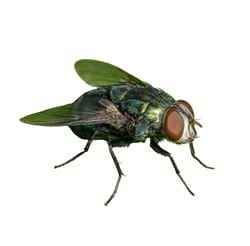
Flies Identification
Flies are grey in color with four dark stripes on their thorax.
Flies are typically about 6-7 mm in length.
Flies have slender bodies, two wings, and a pair of halteres that help them maintain balance during flight.
Get A Free Quote
We are affordable Pest Control Service in GTA & Surroundings Areas.
Flies are common insects found in homes, gardens, restaurants, and outdoor spaces. Although many flies are simply a nuisance, some can contaminate food and spread microorganisms from waste, decaying matter, and other unsanitary surfaces. Understanding what flies are, where they come from, and what attracts them can help homeowners prevent infestations.
Flies belong to the insect order Diptera. Most adult flies have one functional pair of wings, compound eyes, and specialised mouthparts for feeding. Different species have different habits. House flies are commonly found around garbage and food, fruit flies gather near fermenting produce, and drain flies develop in the organic buildup inside drains.
The best way to manage flies is to identify the species, find its breeding source, remove the conditions that allow it to reproduce, and prevent additional insects from entering the property.
What are Flies
Flies are insects belonging to the order Diptera. The name Diptera comes from Greek words meaning “two wings.” Unlike insects with two pairs of functional wings, adult flies have one main pair of wings. Their hindwings are modified into small balancing organs called halteres, which help them control their movement during flight.
Flies occur in many environments, including forests, grasslands, wetlands, farms, and urban neighbourhoods. Some species feed on nectar or other natural materials, while others rely on decaying organic matter, animal waste, plant material, or food scraps.
Many flies are beneficial to the environment. Certain species help pollinate plants, contribute to decomposition, and provide food for birds, spiders, fish, and other animals. However, flies that enter buildings or reproduce near food preparation areas can become unwanted pests.
What Do Flies Look Like?
Flies vary considerably in size, colour, and appearance. Some are tiny enough to be difficult to notice, while others are large and easy to recognise.
Common physical characteristics include:
One pair of wings: Adult flies have one main pair of wings used for flight.
Compound eyes: Their eyes contain many small visual units that help detect movement.
Six legs: Like other adult insects, flies have three pairs of legs.
Specialised mouthparts: Depending on the species, these may be adapted for sponging, piercing, or feeding on liquids.
Different body colours: Common colours include grey, black, brown, green, and metallic blue.
Short or elongated antennae: Antenna shape varies among species and can help with identification.
House flies are usually dull grey, while bottle flies often have shiny metallic bodies. Fruit flies are much smaller and may have reddish eyes. Drain flies have fuzzy wings and a moth-like appearance.
Identifying a fly correctly is important because different species require different control methods.
Fly facts at a glance
| Fact | Detail |
|---|---|
| Insect order | Diptera (true flies) |
| Wings | Two (most insects have four) |
| Eyes | Large compound eyes |
| Mouthparts | Sponging / sucking (proboscis) |
| Size range | 2 mm (drain flies) to 25 mm (crane flies) |
| Adult lifespan | Days to a few weeks |
| Bite humans | Most home species do not bite |
What Are the Most Common Types of Flies?

The following four types of flies are most commonly found in Ontario:
House Flies
House flies (Musca domestica) are among the most familiar household insects. Adults are typically dull grey, with dark markings on the thorax, and are approximately 6–7 mm long.
They are attracted to a range of food sources, including exposed food, garbage, animal waste, and other organic materials. They can enter buildings through open doors, damaged screens, and gaps around windows.
House flies can transfer microorganisms between contaminated materials and food-contact surfaces. Their presence is therefore particularly concerning in kitchens, food businesses, and areas where food is stored or prepared.
Common signs include:
Flies repeatedly landing on food or counters.
Several flies gathering around garbage bins.
Flies entering through open doors or windows.
Increased activity around outdoor waste or animal droppings.
Removing waste, keeping food covered, cleaning bins, and repairing screens are important preventive steps.
Fruit Flies
Fruit flies are tiny insects commonly found in kitchens, grocery storage areas, and places where fruit or other organic materials ferment. Many common fruit flies are tan or brownish-yellow, with reddish eyes. Their small size makes them easy to overlook until several appear together.
Fruit flies are attracted to overripe fruit, vegetables, juice, fermented liquids, and residue inside bottles or recycling containers. They may also reproduce in overlooked food waste.
Common signs include:
Tiny flies hovering around bananas or other ripe fruit.
Flies gathering near juice bottles or recycling bins.
Small insects appearing around compost containers.
Repeated activity near damp, food-contaminated cleaning materials.
To manage fruit flies, remove overripe produce, clean sticky spills, rinse recycling containers, and keep organic waste covered. Traps may help capture adults, but the breeding source must also be removed.
Drain Flies
Drain flies, sometimes called moth flies, are small insects with fuzzy wings and a moth-like appearance. They are usually grey or brown and have a distinctive moth-like appearance. Unlike house flies, they tend to make short, weak flights and often rest on walls near sinks, showers, floor drains, or other damp areas.
Their larvae develop in the organic film that accumulates inside drains and traps. This material can contain food residue, bacteria, fungi, and other organic matter.
Common signs include:
Tiny fuzzy flies resting near bathroom sinks.
Repeated activity around floor drains.
Small flies appearing in a basement washroom.
Flies returning despite ordinary surface cleaning.
The most important step is to inspect and clean the drain where larvae may be developing. Cleaning the drain opening alone may not remove buildup farther inside the pipe. Learn more about this related pest in Acme Pest Solutions’ article on drain flies.
Blow Flies and Bottle Flies
Blow flies and bottle flies are often recognised by their metallic blue, green, or bronze bodies. They are generally larger and more robust than fruit flies. Depending on the species, these flies may breed in dead animals, animal waste, or garbage. They can enter buildings through open doors, windows, and other gaps.
A sudden appearance of several large metallic flies indoors deserves attention, especially when there is no obvious food or garbage source. A dead rodent or bird in an inaccessible location may be one possible explanation, although other sources should also be considered.
Common signs include:
Large flies with shiny blue or green bodies.
Repeated activity near windows and lights.
Flies appearing in one room without an obvious food source.
Increased activity around outdoor waste or animal remains.
If the flies keep appearing, inspect accessible waste areas and consider whether an inaccessible breeding source may be present. Avoid opening walls or entering unsafe spaces without appropriate assistance.
Cluster Flies
Cluster flies can resemble ordinary house flies, but they are often larger, darker, and slower-moving. These insects commonly seek sheltered locations as temperatures change. They may enter through small gaps around windows, doors, siding, roof edges, and other exterior openings. Some then gather in wall voids, attics, or other protected areas.
Cluster flies may become noticeable on warmer days when they move towards windows and light. Unlike many household fly species, cluster flies generally do not reproduce inside homes. Their presence may therefore indicate that they entered the building to find shelter rather than to establish an indoor breeding site.
Preventive measures include repairing screens, sealing suitable exterior gaps, and checking vents for appropriate screening.
Fungus Gnats
Fungus gnats are small, dark, mosquito-like insects often associated with indoor plants. They commonly develop in moist potting media where fungi and decaying organic material provide suitable food. Adults may hover around plant pots, windows, and other bright areas.
Fungus gnats are often mistaken for fruit flies because of their small size. However, their association with houseplants and damp soil is an important identification clue. To reduce their numbers, avoid keeping potting soil unnecessarily wet, improve drainage, remove decaying plant material, and allow the growing medium to dry appropriately for the plant species.
Phorid Flies
Phorid flies are small insects that may have a distinctive humpbacked appearance. Some run across surfaces before taking flight, which can help distinguish them from other small flies. Their breeding sources vary by species and may include decaying organic material, drains, or other moist sites.
When phorid flies repeatedly appear indoors, identifying the source is particularly important. Their presence alone does not prove that a sewer problem exists, but persistent activity near plumbing or damp areas may justify a closer inspection.
Horse Flies and Deer Flies
Horse flies and deer flies are larger outdoor flies. Females of many species feed on blood, and their bites can be painful. They are commonly associated with outdoor environments where suitable hosts and breeding habitats are available. Unlike fruit flies or drain flies, they are not typically controlled by cleaning indoor kitchen surfaces.
Reducing exposure may involve wearing protective clothing, using appropriate insect repellents according to their labels, and managing outdoor conditions where practical.
What Do Flies Eat?
It depends on the species. House flies eat almost anything: garbage, animal feces, rotting food, and human meals. Fruit flies feed on ripe or decaying fruit and vegetables, plus sugary liquids. Drain fly larvae feed on the organic slime inside pipes. Crane fly larvae feed on roots and decaying plant matter in soil. Some adult flies, like crane flies, barely eat at all.
The pattern is simple. Flies go where moist, decaying organic matter is. Remove that material and you remove their food and breeding sites together.
Where Do Flies Breed in Your Home? Common Fly Habitats

Flies breed in hidden, moist areas where they can find food, organic matter, and moisture. Common breeding spots around homes include:
- Kitchen drains and garbage disposals — Drain flies can develop in organic buildup inside drains.
- Garbage cans and recycling bins — Food residue and moisture can attract house flies.
- Fruit bowls — Overripe or rotting produce can attract fruit flies.
- Compost bins — Decaying organic material provides ideal breeding conditions.
- Pet waste and litter boxes — Animal waste can attract several fly species.
- Mop buckets and damp cleaning tools — Moist organic material can create suitable conditions for flies.
- Basement floor drains — Rarely used drains may collect moisture and organic debris.
- Lawns and garden soil — Damp soil can provide breeding areas for crane fly larvae.
Flies can be found in almost every habitat on Earth, including forests, fields, cities, and rural areas. They are especially common in places with moisture and decaying organic matter, such as compost piles, garbage cans, and areas with animal waste.
Some species, such as horse flies, prefer open grassy areas, while others, such as fruit flies, are commonly found in kitchens and food storage areas. If you are dealing with a fly problem in your home or neighborhood, contact flies control toronto for professional assistance.
If you need help with flies, mosquitoes, ants, or other common pests, contact Acme Pest Solutions for reliable pest control in Toronto
Our Guarantee
Acme Pest Solutions is dedicated to providing exceptional pest control services focusing on customer satisfaction. We aim to exceed industry standards by delivering high-quality work. We stand behind our work with a guarantee for each job completed, giving customers peace of mind. We are committed to ensuring seamless and high-quality service and will return to make things right if any issues arise.
Flies Lifecycle
The four stages
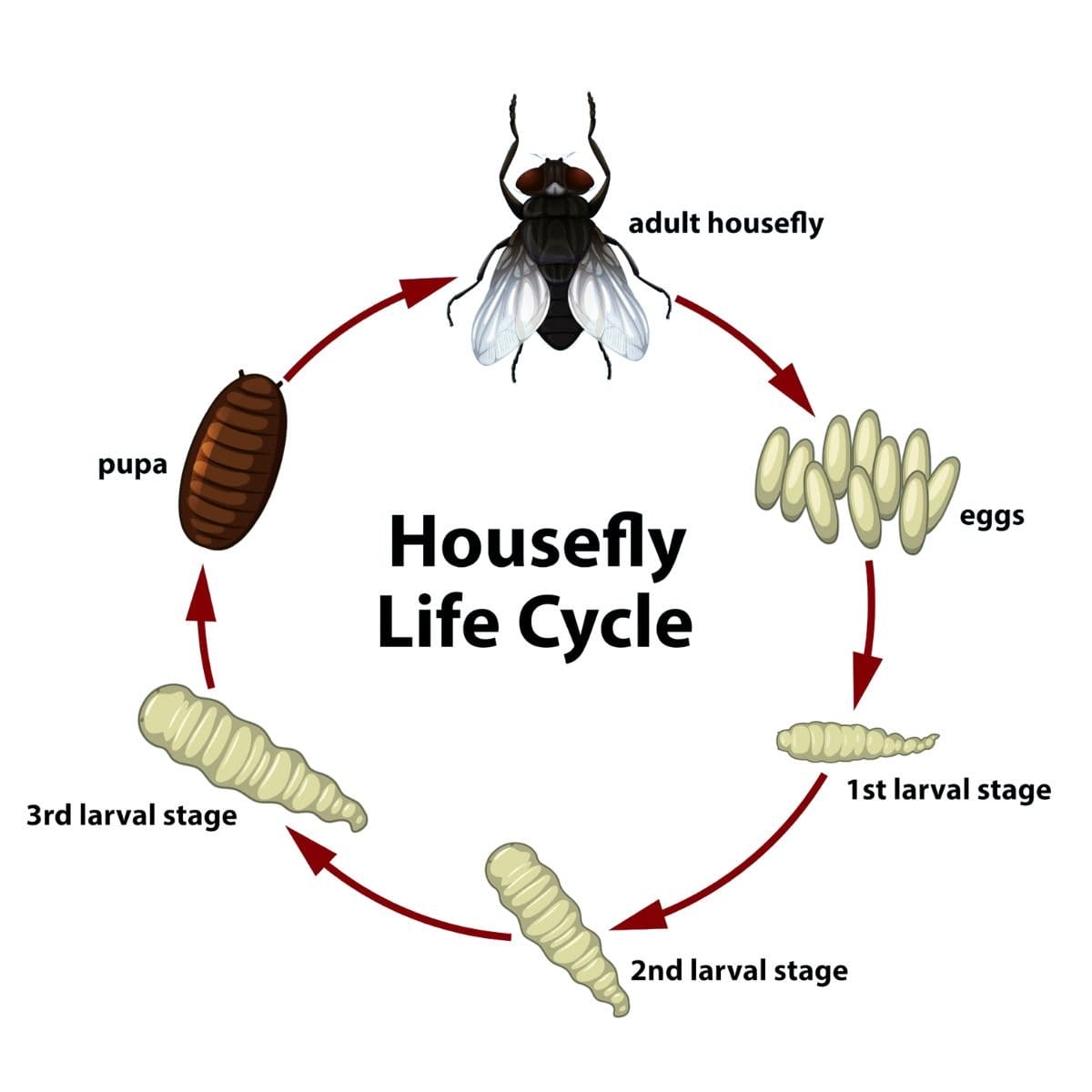
All flies go through complete metamorphosis: egg, larva, pupa, and adult. The female lays eggs on moist organic matter. Eggs hatch into larvae, known as maggots. Maggots feed and grow, then form pupae. Adult flies emerge from the pupae and the cycle repeats.
How fast do flies multiply?
Very fast. A house fly can go from egg to adult in 7 to 10 days in warm weather. One female lays up to 500 eggs in her short life. Drain flies complete their cycle in 8 to 24 days: eggs hatch in 32 to 48 hours, larvae feed for 8 to 15 days, pupae develop in 20 to 40 hours, and adults live 1 to 2 weeks. This speed is why a few flies become hundreds if the breeding source stays.
What Health Risks and Diseases Do Flies Spread?
House flies and blow flies can spread over 65 infectious diseases. They pick up pathogens on their feet and mouthparts from feces, garbage, and rotting matter. Then they land on your food, dishes, or open wounds and transfer those germs.
Diseases linked to flies include:
- Bacterial infections: Salmonella, E. coli, cholera, and Shigella (dysentery)
- Viral infections: Rotavirus and enteroviruses
- Eye infections: Conjunctivitis (pink eye)
- Wound infections: Myiasis, where fly larvae infest open wounds
Drain flies do not bite or sting, and they cause no structural damage. But they breed in sewage and pipe slime, so they can carry bacteria onto kitchen and bathroom surfaces. In large numbers, their shed hairs may trigger respiratory allergies or asthma in sensitive people.
How Can You Prevent Flies?
Follow this practical checklist:
- Take out garbage often. Keep bins sealed and wash them regularly. Food residue is the top attractant.
- Clean drains weekly. Scrub inside drains with a brush and use a bio-enzymatic drain cleaner. This removes the slime that drain flies breed in. Bleach alone does not remove the buildup.
- Store fruit properly. Keep ripe fruit in the fridge. Throw out overripe produce right away.
- Clean up pet waste. Pick up yard waste promptly and do not leave pet food bowls out overnight.
- Rinse recycling. Wash cans and bottles before putting them in the bin.
- Fix your screens. Install or repair window and door screens to block entry.
- Wipe surfaces. Do not leave dirty dishes or spills sitting out.
- Fix leaks. Dry out damp areas under sinks and around pipes.
Note what does not work: keeping your home brightly lit can actually attract more flies, since many species move toward light. Locking pets indoors solves nothing; cleaning up after them does. And indoor barrier sprays do little against crane flies, which breed outdoors in lawns, not inside your home.
What Should You Do If You Have a Fly Infestation?
Follow these steps in order:
- Find the breeding source. This is the most important step. Check drains, garbage cans, fruit bowls, and compost. For drain flies, tape clear plastic over the drain overnight; flies stuck underneath confirm the source.
- Remove the source. Throw out infested food. Deep-clean the garbage cans. Scrub the drains.
- Deep clean the area. Wash surfaces, empty bins, and remove all decaying matter.
- Set out traps. Vinegar traps catch fruit flies. Sticky traps catch house flies. These reduce adults but do not solve breeding.
- Monitor for one week. If flies keep appearing, the breeding source is still active.
- Call a professional. If you cannot find the source or flies return after cleaning, expert help is needed.
Spraying adult flies without removing the breeding source never works. New adults keep emerging until the source is gone.
How Much Does Fly Control Cost in the GTA?
As a ballpark, standard residential fly control in the GTA typically costs between $200 and $425. This covers inspection, breeding-source identification, and targeted treatment. Drain fly jobs that need deep drain cleaning may cost more, depending on how many drains are affected. Commercial properties like restaurants usually need custom quotes.
Prices vary by company and severity. The fastest way to know your exact cost is a free quote. Acme Pest Solutions gives a clear upfront price before any work begins, with no hidden fees. Call 416-453-2444 for a free quote.
When Should You Call a Pest Control Professional?
A few flies may be resolved through routine cleaning, source removal, and exclusion. Professional assistance may be appropriate when the problem is persistent, widespread, or difficult to explain.
Consider an inspection if:
Flies continue to appear after their likely food source has been removed.
Large numbers of flies appear suddenly in one room.
Drain flies return after the drains have been cleaned.
Flies appear to originate from a wall, ceiling, attic, or another inaccessible space.
A commercial property has recurring fly activity near food handling areas.
You cannot confidently identify the species or its breeding location.
A professional inspection can help determine which type of fly is present, where it may be developing, and which control measures are appropriate.
The inspection should consider the insect’s behaviour, the property’s condition, possible entry points, and the availability of breeding material. Recommendations will depend on the findings rather than on the assumption that every fly problem has the same cause.
For help with a persistent pest problem, visit Acme Pest Solutions to learn more about its pest control services.
Frequently Asked Questions (Faqs)
What attracts flies the most?
Attractants vary by species. House flies are drawn to food and waste, fruit flies to fermenting produce and liquids, and drain flies to organic buildup in moist drains. Identifying the fly helps determine which source needs attention.
Where do flies lay their eggs?
Different species select different breeding sites. House flies may lay eggs in suitable moist organic waste, fruit flies on fermenting materials, and drain flies in organic films inside drains. Removing these materials helps interrupt the life cycle.
How quickly do flies reproduce?
The development period varies by species and environmental conditions. Common fruit flies can complete their life cycle in roughly 8–10 days under suitable conditions, while drain fly development may take longer. Temperature and access to food and moisture affect development.
Are flies dangerous to humans?
Some flies can transfer microorganisms to food and surfaces, creating a potential food contamination risk. Others are mainly nuisance pests. Good sanitation, food protection, and appropriate fly control reduce exposure.
Why do flies keep coming back after I clean?
The breeding source may remain hidden, or new flies may continue entering from outside. Check drains, recycling containers, garbage bins, damp organic material, and gaps around doors and windows.
Do fly traps eliminate an infestation?
Traps can reduce adult fly numbers and help monitor activity, but they may not eliminate an infestation by themselves. If larvae continue developing in a breeding site, new adults may keep emerging.
Why are flies gathering around my bathroom drain?
Drain flies and some other small insects can develop in organic material inside drains. Clean the drain and trap thoroughly, and investigate other damp areas if the activity continues.
Can flies enter through small cracks?
Yes. Many flies can enter through open doors, damaged screens, gaps around windows, and other openings. Sealing suitable entry points helps reduce indoor activity.
Conclusion
Flies are a normal part of nature, but they do not belong in your home. House flies spread over 65 diseases. Fruit flies take over kitchens in days. Drain flies signal buildup inside your pipes. Crane flies damage lawns from below. Each type has a different breeding source, and finding that source is the key to stopping them.
Prevention comes down to sanitation: sealed garbage, clean drains, fresh produce, and intact screens. When flies keep returning despite your best efforts, the breeding source is likely hidden where cleaning cannot reach. A professional finds it and treats it at the source. Browse our pest library to learn about other common home pests, from ants and cockroaches to bed bugs and termites.
Should I use insecticide to get rid of flies?
Not always. Cleaning, source removal, exclusion, and appropriate traps are often useful first steps. If an insecticide is necessary, select an approved product for the intended pest and location and follow its label.
Conclusion
Conclusion
Flies are common insects, but recurring activity inside a home or business should not be ignored. Different species are attracted to different conditions, so identifying the fly is the first step towards effective control.
Keep food covered, remove waste regularly, clean drains when necessary, repair entry points, and address damp organic material. If flies continue to appear despite these measures, a closer inspection may be needed to locate the source.
Acme Pest Solutions provides pest control services for residential and commercial properties. If a persistent fly problem is affecting your property, contact the team to discuss the issue and determine an appropriate next step.